
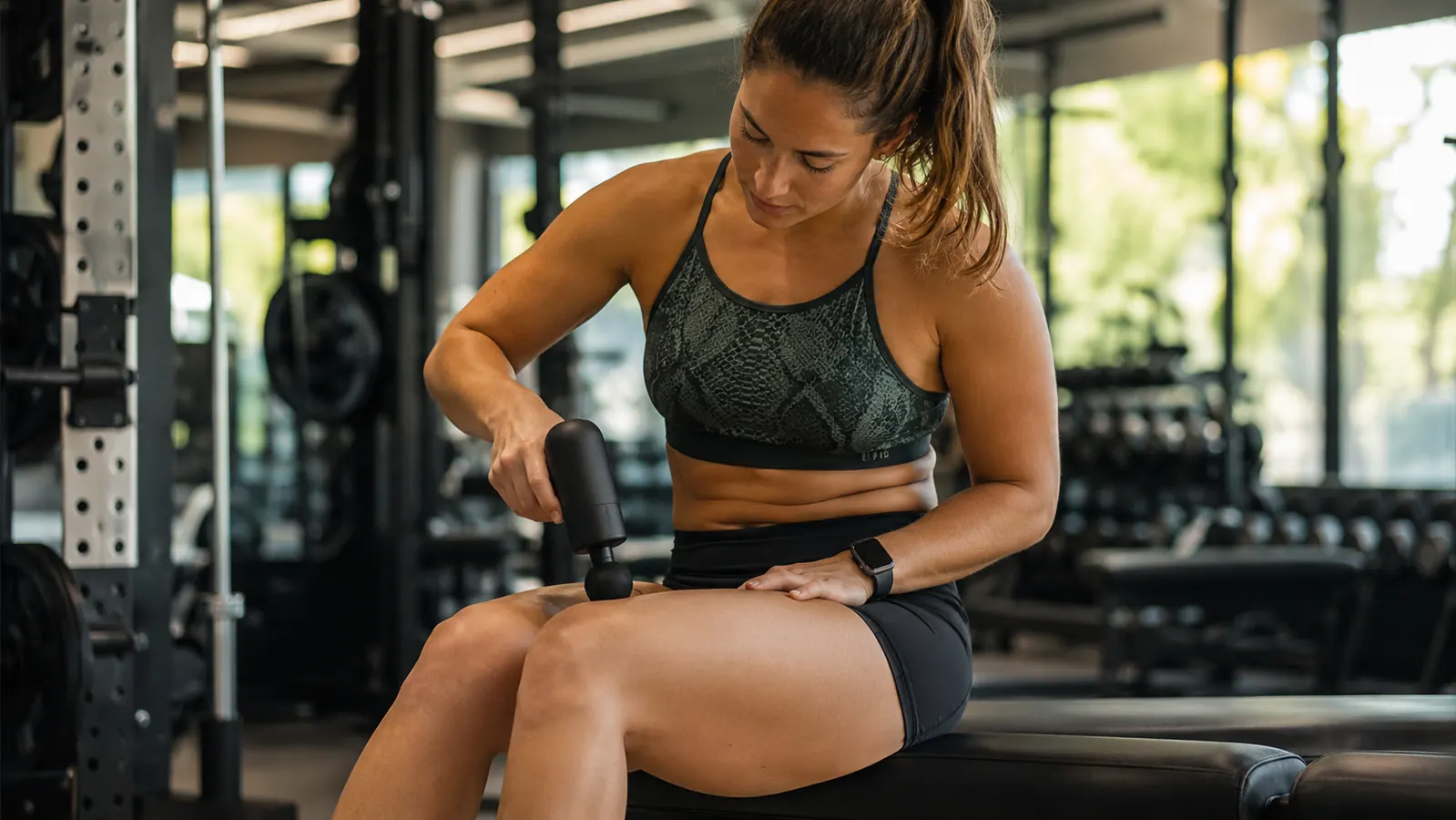
I have a foam roller in my facility that has been sitting in the corner collecting dust for two years. That is not because foam rolling does not work. The research on myofascial release is solid. It is because the athletes I coach stopped using the roller once they got their hands on a percussive massager, and their soreness markers and next-session performance made the case better than I could. If you are still spending 12 minutes on the floor working out tight quads before your next session, here is the argument for switching.
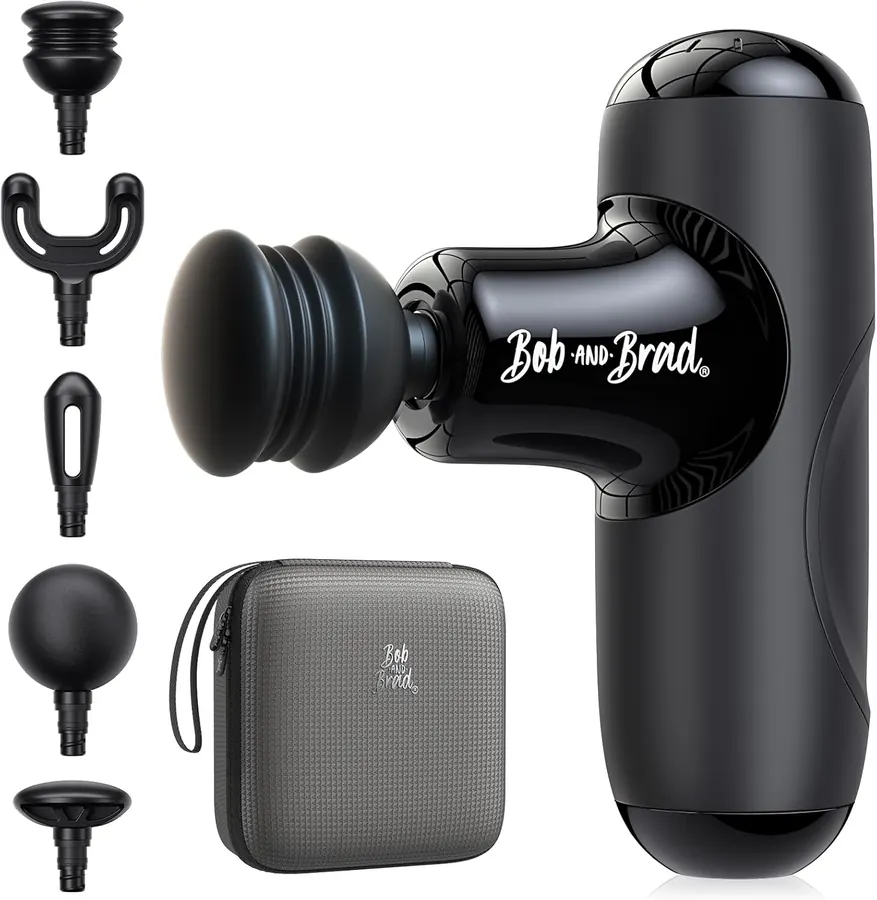
The BOB AND BRAD Q2 Mini is the tool I recommend to most athletes who train three or more days a week. It fits in a gym bag, runs for roughly 10 hours on one charge, and puts out enough stall force to address the tissue that actually needs attention. At a 4.7-star rating across more than 15,000 verified reviews, it earns that reputation. These 10 reasons explain why it replaces the roller for most people.
Still using a foam roller? The Q2 Mini covers more muscle in less time.
The BOB AND BRAD Q2 Mini is the top-rated mini massage gun on Amazon. Pocket-sized, quiet, and built for athletes who train back-to-back days.
Amazon Check Today's Price on Amazon →Percussion reaches deeper tissue layers than rolling ever will
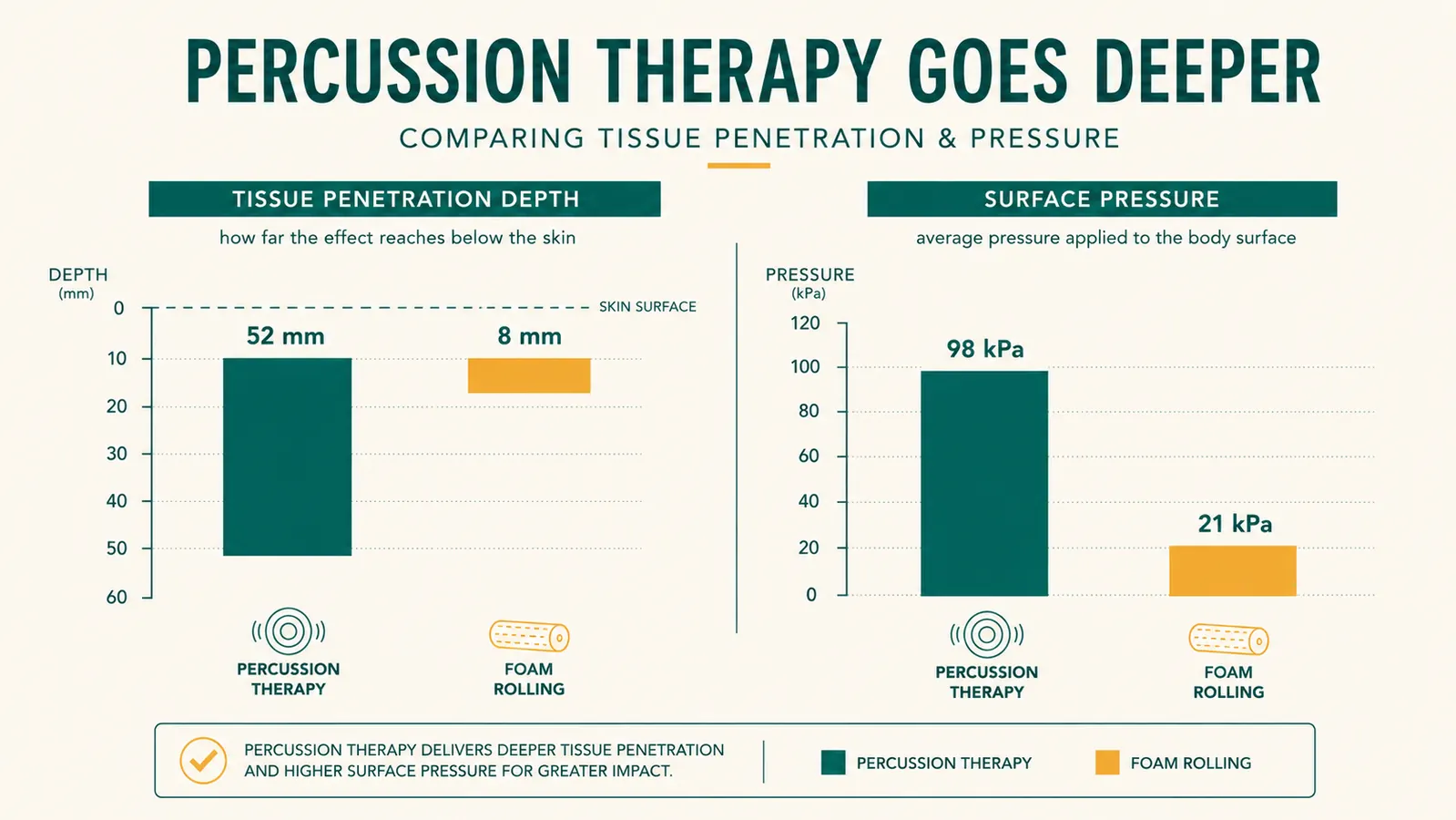
A foam roller applies compressive force to the surface of the muscle and fascia. That works for superficial tightness. A percussion massager delivers rapid impacts at up to 3200 RPM, driving mechanical energy further into the tissue. The BOB AND BRAD Q2 Mini operates across four speed settings specifically so you can start shallow and progress into deeper layers without bracing for pain. That depth difference matters on dense muscle groups like hamstrings, glutes, and the mid-trap.
It takes four minutes, not fourteen
A proper foam rolling protocol covering quads, IT band, hip flexors, thoracic spine, and calves takes most people 12 to 15 minutes. A targeted percussion session on the same areas, using the Q2 Mini at two to three minutes per region, takes four minutes and covers more functional surface area. That time difference matters on days when you have 20 minutes between a training session and a workday.
You do not need floor space or a mat
Rolling requires you to get on the ground, position your bodyweight over the tool, and maneuver through a range of motion. A massage gun requires a hand. Athletes in hotel rooms, offices, or cramped locker rooms can run a full post-workout protocol on the Q2 Mini standing up. At 1.1 pounds with a travel case included, it disappears into any bag.
Attachment heads let you address specific tissue types
The Q2 Mini ships with five attachment heads. The round ball head works for large muscle bellies. The flat head is better for broad surface areas. The bullet head reaches into the peroneals, adductors, and the space between the scapula and the spine, areas that a cylindrical roller physically cannot access. Foam rolling is one tool. Percussion with five heads is five tools.
Noise is not a problem at this price point
The original complaint about percussion massagers was noise. The Q2 Mini runs at 40 to 50 decibels, which is roughly the volume of a quiet conversation. You can use it in a shared bedroom, a hotel room, or an office without the jackhammer sound older models were known for. That low noise floor is the main reason it replaced the gun I was recommending a few years ago.
It works as a warm-up tool, not just a cooldown tool
Foam rolling is almost exclusively used post-session. Percussion therapy has a legitimate pre-session application: a 30 to 60 second burst on a muscle group increases local circulation and reduces neural inhibition before you load it. I use the Q2 Mini on tight hip flexors for 45 seconds before a heavy squat session. The range of motion difference is consistent. That doubles the utility of one tool.
Battery life holds up through a full training week
BOB AND BRAD rates the Q2 Mini at 10 hours of continuous use. For most athletes doing two to three five-minute sessions per day, that translates to roughly five to seven weeks per charge. The roller never needs charging. Fair. But the Q2 Mini battery is infrequent enough to charge that it is not a meaningful inconvenience. You plug it in on rest day and forget about it.
Stall force is high enough for athletes who actually train hard
A common knock on budget massage guns is that they stall when you apply real pressure. The Q2 Mini is rated at 35 lbs of stall force. That is more than enough for most application scenarios. Where foam rolling requires your bodyweight to create pressure, the Q2 Mini lets you modulate exactly how much force you are applying, which means you can work near an injury site without loading it the way rolling would.
Someone else can use it on your back
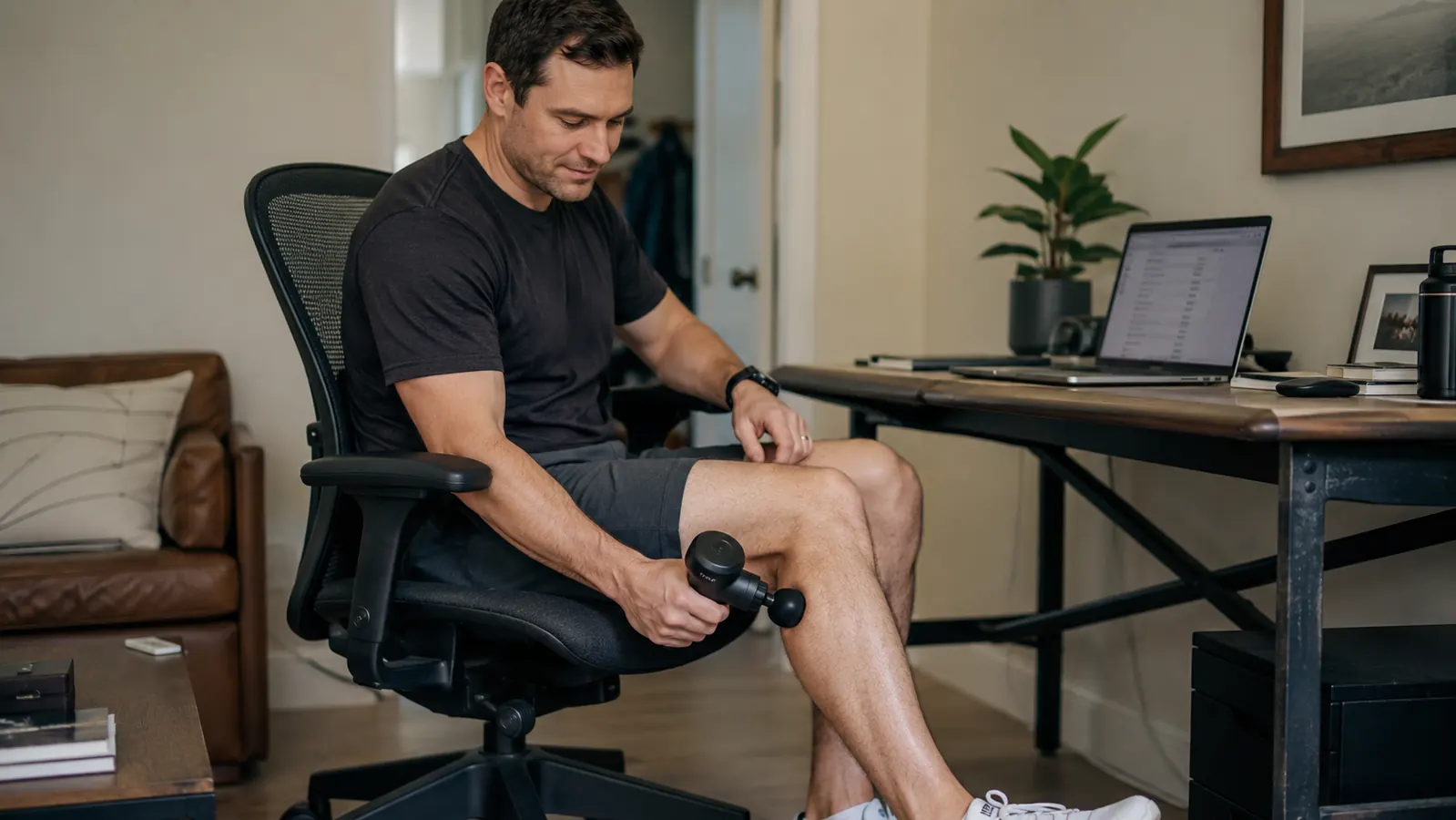
There is no self-myofascial release protocol that adequately addresses mid-thoracic erectors and the area between the shoulder blades. You can prop a roller against a wall, but the control is limited. Hand your partner or training buddy the Q2 Mini and they can address those areas in 90 seconds with precise control. That is a genuinely different level of access than any rolling tool provides.
The long-term adoption rate is higher
This one is clinical honesty, not product marketing. The athletes I track who got a percussion massager are still using it six months later. The athletes who relied on foam rolling mostly stopped around the six-week mark. Inconvenience and floor-time are real barriers to consistent recovery work. A tool that takes less friction to pick up gets used more. More consistent use is what actually drives soreness reduction over a training cycle. See the full breakdown in our long-term review of the BOB AND BRAD Q2 Mini.
What I Would Not Skip
Foam rolling still belongs in a mobility protocol for two specific applications. For thoracic extension over a roller, there is no percussion equivalent. And for long-duration IT band work where you need continuous compressive pressure along the entire length of the band, a 13-inch roller like the TriggerPoint GRID has an edge over a handheld device. If you have a dense IT band or a history of knee tracking issues, keep a quality foam roller for that specific work. For everything else, the Q2 Mini is faster, more precise, and more consistently used. That is the honest case.
The recovery tool that gets used every day beats the one that is technically superior but sits in the closet. Percussion wins that fight on convenience alone.
Ready to cut your recovery time in half? The Q2 Mini is the starting point.
The BOB AND BRAD Q2 Mini has 15,000+ reviews and a 4.7-star average for a reason. Five attachments, 10-hour battery, fits in your gym bag. If you train three or more days a week, this tool pays for itself in soreness you do not carry into your next session.
Amazon Check Today's Price on Amazon →