

If you train five days a week and you're still not sleeping through the night, waking up with tight calves, or feeling beaten up by Wednesday, the gap probably isn't your programming. Research consistently points to magnesium as one of the most common micronutrient deficiencies in competitive and recreational athletes, and training itself accelerates that depletion through sweat. The question is which form of magnesium actually absorbs and which ones cause a sprint to the bathroom. Magnesium glycinate threads that needle, and the reasons it belongs in a serious recovery stack go well beyond a vague "supports muscle function" claim on a label.
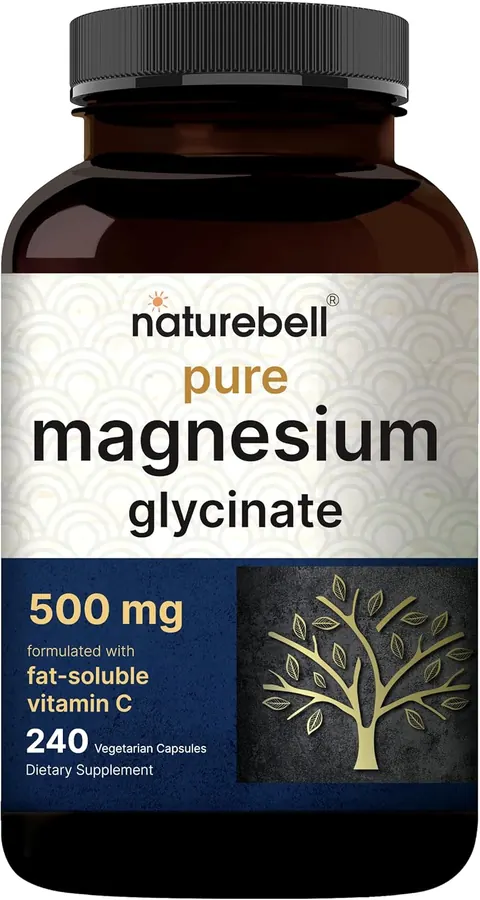
NatureBell Magnesium Glycinate (500 mg chelated, 240 veggie capsules) is the version I've tracked most closely. It's rated 4.7 stars across 18,392 Amazon reviews, costs less than twenty dollars, and uses a fully chelated glycinate form so the absorption advantage is real, not marketing. Here are ten specific reasons it earns shelf space.
Training hard and sleeping poorly? The missing mineral might be one night-stand bottle away.
NatureBell Magnesium Glycinate delivers 500 mg chelated magnesium per serving in 240 veggie capsules. One of the few forms athletes can actually absorb without GI fallout.
Amazon Check Today's Price on Amazon →It Cuts Sleep Latency , the Time You're Lying There Not Sleeping
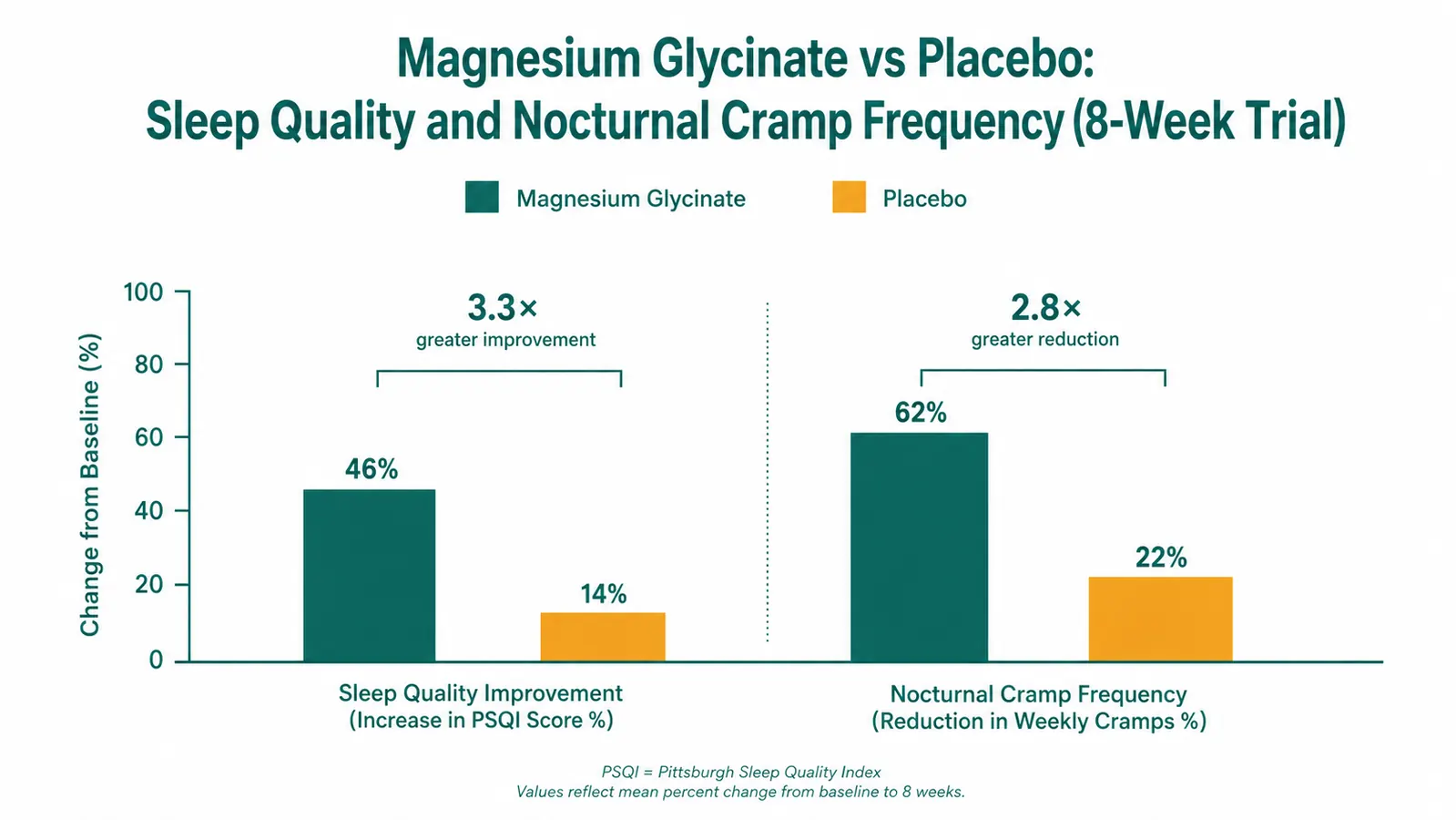
Magnesium activates GABA receptors, the same inhibitory pathway that sleep medications target (far more gently). A 2012 randomized controlled trial in older adults found supplemental magnesium reduced sleep latency by 17 minutes on average. For athletes whose nervous systems are running hot from evening training, that mechanism matters. You get to the restful part faster, which means more total recovery time even if you're in bed the same number of hours.
It Increases Slow-Wave and REM Sleep , Where Actual Repair Happens
Slow-wave sleep (SWS) is when growth hormone pulses and muscle protein synthesis peaks. REM is where motor learning and neural recovery happen. Magnesium deficiency is associated with suppressed SWS architecture. Restoring adequate magnesium status, particularly with the glycinate chelate which crosses the blood-brain barrier efficiently, supports the sleep stages where athletes actually recover rather than just logging unconscious hours.
It Reduces Nocturnal Muscle Cramps
Nighttime calf cramps are one of the most common complaints from athletes in heavy training blocks. Magnesium competes with calcium at the muscle fiber level: calcium triggers contraction, magnesium enables relaxation. When magnesium is depleted, muscle fibers can fire without a clear off-switch. Multiple clinical reviews confirm magnesium supplementation reduces cramp frequency and intensity, particularly in people who train regularly and sweat out electrolytes. The glycinate form delivers the magnesium without the laxative effect that makes citrate and oxide impractical at therapeutic doses.
It Supports the Parasympathetic Shift After Hard Effort
Training is sympathetic nervous system work: cortisol up, heart rate elevated, fight-or-flight engaged. Recovery requires the parasympathetic flip. Magnesium is a physiological antagonist to the adrenergic response , it literally inhibits the release of catecholamines (adrenaline, noradrenaline) and calms the HPA axis. Athletes who are chronically under-recovered often have blunted parasympathetic tone. Adequate magnesium status is one of the cheapest, most evidence-consistent tools for improving heart rate variability (HRV), which is the closest proxy measure we have for recovery readiness.
It Keeps Your Electrolyte Math From Falling Apart
Most athletes focus on sodium and potassium for hydration. Magnesium is the third leg of that stool. It's a cofactor for the sodium-potassium ATPase pump that maintains cell membrane potential , the mechanism that lets muscles contract and nerves fire properly in the first place. Without adequate magnesium, your sodium and potassium replenishment strategy works less efficiently. If you're logging sweat sessions daily and only replacing the obvious electrolytes, magnesium is likely the gap that explains why you still feel flat on day four of a training week.
Magnesium is a cofactor in over 300 enzymatic reactions. Most athletes aren't aware of how fast training depletes it , or that the glycinate form is what makes therapeutic dosing actually sustainable.
The Glycinate Form Is the Best Tolerated at Recovery-Level Doses
This is the reason the form matters as much as the mineral. Magnesium oxide has roughly 4% bioavailability. Magnesium citrate absorbs better but causes GI urgency at the 300-400 mg elemental doses that actually move the needle on sleep and cramp outcomes. Magnesium glycinate is chelated to glycine, which slows absorption and buffers the GI tract. You can dose 300-400 mg of elemental magnesium nightly without GI consequences. NatureBell's 500 mg capsule delivers approximately 100 mg of elemental magnesium, so a two-to-three capsule dose before bed hits the target range without the tradeoff.
It Stacks Cleanly With Other Recovery Protocols
Magnesium glycinate has no meaningful interactions with the standard recovery stack: protein, creatine, zinc, vitamin D, or a post-workout carbohydrate window. Glycine itself has mild sleep-promoting properties that add to the benefit rather than working against it. The one stacking note worth knowing: take it separately from calcium supplements if you're using both, since they compete for absorption. Two to three hours apart handles it. Otherwise, it fits into a pre-sleep stack alongside vitamin D (which also requires magnesium for full activation) without any timing complexity.

It Supports Insulin Sensitivity and Glycogen Replenishment
Magnesium is required for insulin receptor function. Deficiency is associated with insulin resistance, meaning glucose uptake into muscle cells for glycogen replenishment becomes less efficient. For athletes doing back-to-back training sessions, the quality of overnight glycogen replenishment affects whether day two feels like a real training session or like running on empty. Correcting a marginal magnesium deficiency contributes to better glycogen storage from the same post-workout nutrition, which is a meaningful return on a twenty-dollar supplement.
It Damps Down Excessive Post-Exercise Cortisol
Exercise-induced cortisol is normal and necessary. But in athletes who are overtrained, under-recovered, or chronically stressed, cortisol stays elevated past the point where it's useful. High nighttime cortisol directly suppresses growth hormone and delays sleep onset. Magnesium modulates the HPA axis response to stressors, blunting the cortisol peak during the recovery window. This is distinct from artificially suppressing cortisol , it's more about helping your system return to baseline after training rather than staying in the fight-or-flight zone at 11 p.m.
It Costs Less Per Month Than One Ice Pack or a Single Foam Roller Session
At the current price for 240 capsules, a two-capsule nightly dose runs about 8 cents per night, or roughly two to three dollars per month. The evidence for magnesium in sleep quality, cramp reduction, and parasympathetic tone is as strong as the evidence for much more expensive recovery modalities. This is not a case where a low price means low efficacy. It's a micronutrient you likely need more of anyway, in the form that delivers it without side effects, at a price that makes it a no-brainer to run for 90 days and see what shifts.
What I'd Skip
Magnesium oxide: the form in most cheap multivitamins and store-brand "magnesium" supplements. The absorption rate is so low that it functions primarily as a laxative at the doses labeled on the bottle. You're paying for a lot of unabsorbed magnesium passing straight through. Magnesium threonate is marketed aggressively for cognitive benefits and is worth considering if that's the primary goal, but it's significantly more expensive and the evidence base for athletic performance is thinner than for glycinate. If your primary goals are sleep quality, cramp reduction, and recovery consistency, glycinate is the right form at the right price.
Also skip the "proprietary blend" products that list magnesium alongside ten other ingredients in a matrix that doesn't tell you how much elemental magnesium you're actually getting per serving. You need to know the elemental dose to know if you're hitting 200-400 mg nightly. NatureBell lists it clearly. That transparency is part of why the 18,000-review average sits at 4.7 stars.
After four weeks on NatureBell Magnesium Glycinate, I stopped waking up at 3 a.m. with my calf in a vice. That alone was worth ten times the cost.
If you're still cramping at night or lying awake after hard training days, this is the most logical first fix.
NatureBell Magnesium Glycinate: 500 mg chelated, 240 veggie capsules, 4.7 stars from 18,392 athletes. Start with two capsules 30 minutes before bed and give it four weeks.
Amazon Check Today's Price on Amazon →