

Six months ago I was training five days a week and waking up feeling like I was sixty-two. I'm forty-one. Deadlifts on Tuesday meant Wednesday was a write-off from the hips down. Squats on Thursday had me shuffling to the coffee maker on Friday morning like I'd slept wrong on a cold gym floor. I was not injured. I was just stiff, slow to warm up, and spending the first forty minutes of every session trying to unlock joints that had no business being locked. My coach called it accumulated fatigue. I called it unsustainable.
I had a foam roller in the closet. A smooth, white, fifty-cent-density thing I'd bought at a discount sporting goods store and used twice before concluding that foam rolling was overrated bro-science. Then a physical therapist I trust told me the tool was fine but the roller was garbage, and handed me a TriggerPoint GRID 1.0 to try on my IT band right there in her office. The difference was immediate enough that I bought one the same afternoon.
The difference between a decent foam roller and the GRID is the difference between pressing on a muscle through a pillow versus pressing on it directly. You actually feel the tissue respond.
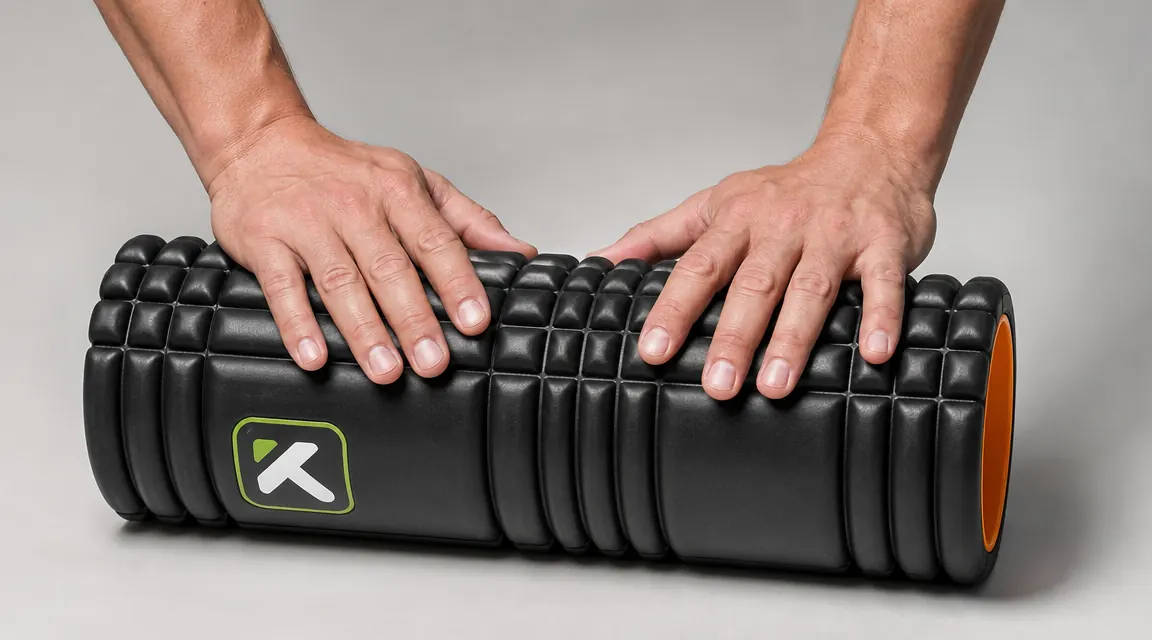
The GRID is a thirteen-inch hollow-core roller with three distinct surface zones built into a firm EVA foam grid pattern. The flat sections, the raised tubes, and the grid intersections each create different pressure profiles on the tissue underneath. That variety matters because fascia is not uniform. Your IT band needs sustained compression in one spot. Your thoracic spine needs something firmer to coax extension. Your calves need a rolling motion, not a static hold. A single-surface roller treats all of that the same. The GRID does not.
Your next training day starts the morning before it
The TriggerPoint GRID 1.0 has 31,842 Amazon reviews and a 4.7-star average. It's the foam roller sports-medicine clinics actually keep in their offices.
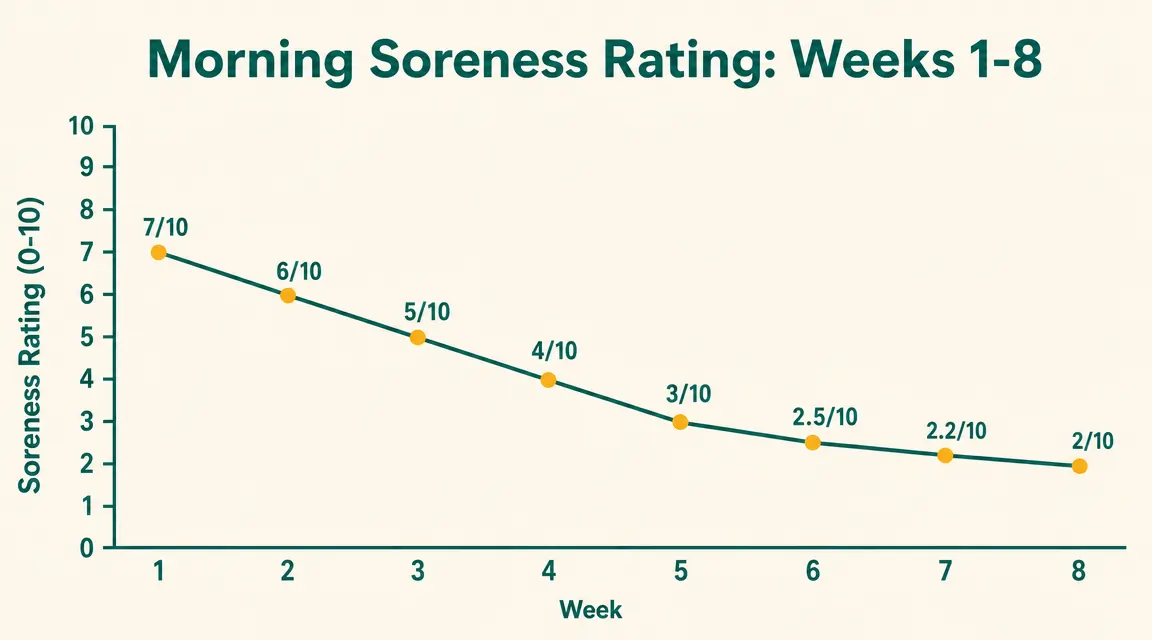
Amazon Check Today's Price on Amazon →Week two was the first time I noticed something shift. My morning routine was simple: six minutes of rolling before anything else. Two minutes on the thoracic spine and lats lying over the roller. Two minutes on the glutes and piriformis, one side at a time. Two minutes on the calves. That is it. No elaborate sequence, no watching a YouTube tutorial while I did it. Just systematic pressure on the tissue that accumulates the most tension across a training week. By day ten, I was getting out of bed without the slow-creep warmup shuffle. My hips felt like they belonged to someone ten years younger.
The GRID is hollow core, which means it does not compress down under bodyweight the way a solid foam roller does over time. You buy a solid roller and in six months it has a body-shaped divot in it. The GRID keeps its shape because there is nothing to compress. After eight weeks of daily use, mine looks and feels identical to the day it arrived. That matters if you are actually going to make this a consistent habit rather than a once-a-month floor exercise.
By week six the more interesting changes were happening. I was running a lower-body strength day on Monday and Tuesday, taking Wednesday for upper work, then coming back to legs on Thursday. That Tuesday-to-Thursday back-to-back had always been my weak point. Quads that had not recovered from Tuesday's front squats made Thursday's Romanian deadlifts sloppy. After six weeks of consistent morning rolling, Thursday felt like a different workout. Not because the fatigue was gone, but because the residual stiffness that was masking it had cleared. I could feel the right muscles doing the work instead of compensating around locked-up tissue.
What I'd Tell You If We Were Sitting at My Kitchen Table
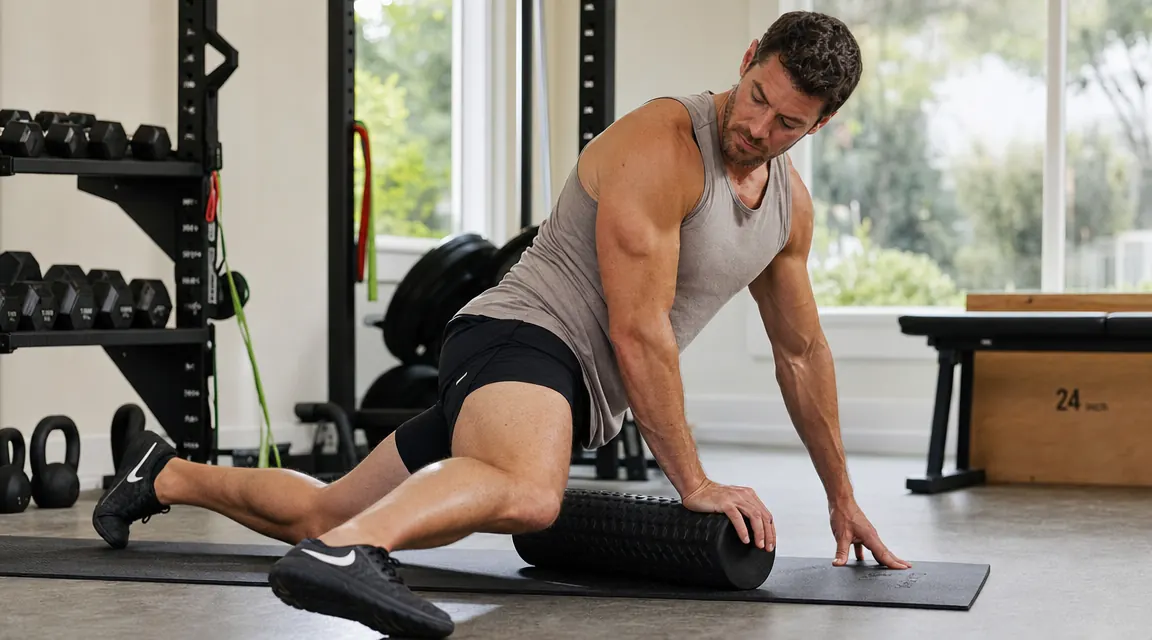
Here is what I would say if you asked me whether to buy this thing. First, the honest part: foam rolling is not a recovery cure. It does not replace sleep. It does not repair tissue the way proper nutrition and rest do. What it does is reduce the mechanical restriction that makes soreness feel worse than it is and slows your warmup. That restriction is real, it is addressable, and spending ten minutes a day on it compounds over months in a way that surprised me.
Second, the cheap version does not work the same way. I tried three smooth rollers before this one. They all felt the same because they are the same: uniform density, no texture differentiation, compresses down after a few months of use. The GRID costs more, and the cost difference is real when you are comparing it to a ten-dollar option. But a foam roller you actually use every morning for two years is a different investment than a cheap one you put back in the closet after a week.
Third, the cons are real. The GRID is not the softest roller on the market. If you have never foam rolled before and you get on the IT band, it will be uncomfortable the first week. That is not the roller being bad, that is tissue that has not been addressed in a while responding to pressure. You work through it by starting with less bodyweight on the roller and building up. But if you have a low pain tolerance or are coming back from a recent injury, you want to talk to your physio before you commit to this density level.
The thing I keep coming back to is this: I train because I want to keep training. I am not competing. I am not chasing a number. I am trying to be the kind of forty-one-year-old who can squat and sprint and lift heavy things for the next thirty years without wrecking the machine. The TriggerPoint GRID has become the ten-minute daily habit that makes five training days per week sustainable instead of just barely survivable. That is a specific, boring, unsexy outcome. It is also exactly what I needed.
Ten minutes a morning. Eight weeks. Your back-to-back training days will thank you.
The TriggerPoint GRID 1.0 Foam Roller is rated 4.7 stars across 31,842 Amazon reviews. Backed by a lifetime guarantee from TriggerPoint.
Amazon Check Today's Price on Amazon →