
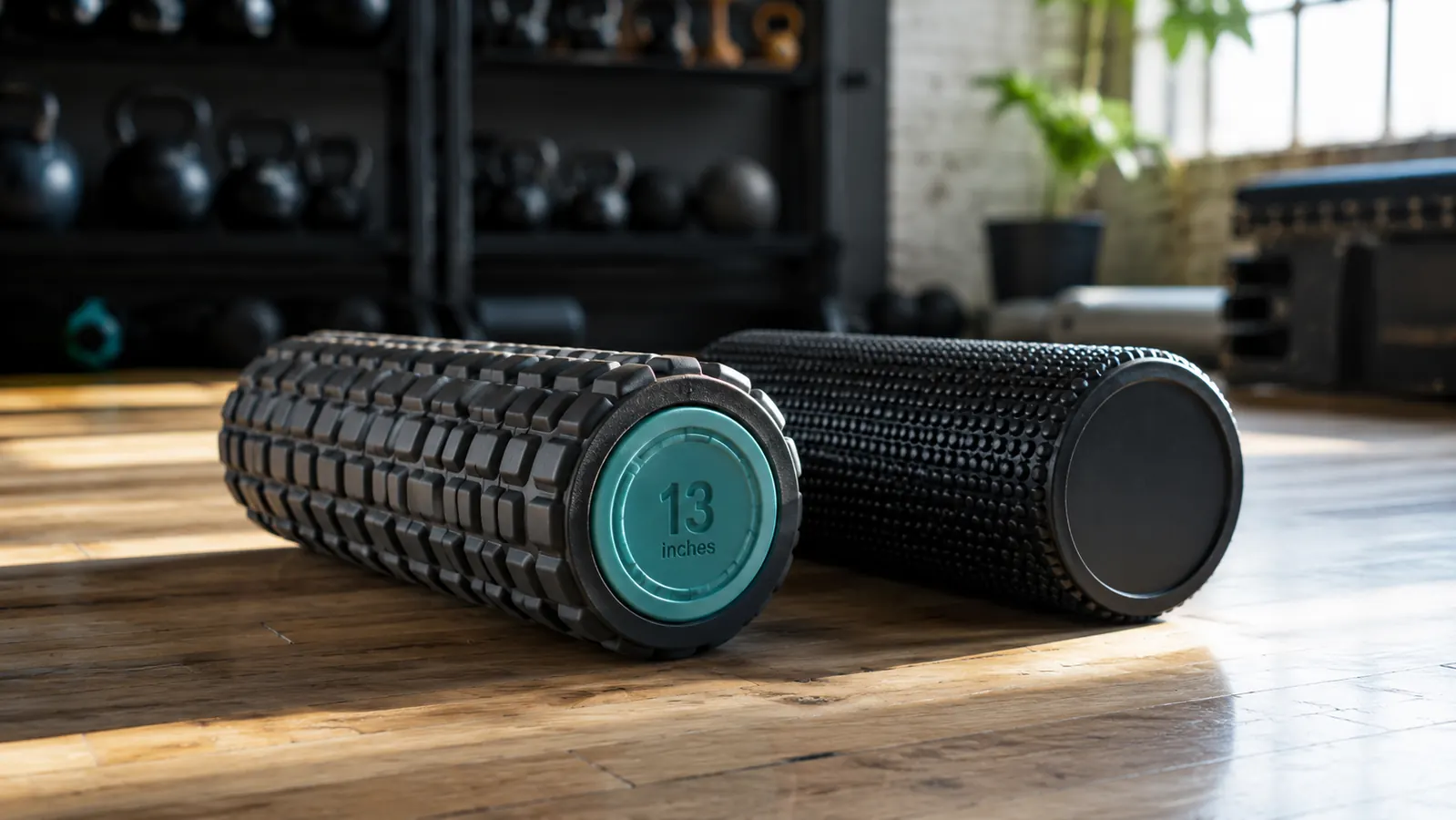
If you train four or five days a week, you already know the feeling: tight hip flexors at 6 AM, a nagging IT band that won't quit, thoracic stiffness that makes the first squat of every session feel like you borrowed someone else's spine. You've been told to foam roll. The question nobody answers clearly is which foam roller to actually buy.
The TriggerPoint GRID 1.0 and the Rumble Roller are the two names that come up in every strength coach conversation, every physical therapy waiting room, and every Reddit thread about myofascial release. Both cost more than a plain PE foam cylinder. Both claim to deliver a deeper, more effective tissue release. But they work very differently, they feel very different under load, and they are built for different kinds of athletes. Here is the side-by-side breakdown.
| attribute | left | right |
| attribute | left | right |
| attribute | left | right |
| attribute | left | right |
| attribute | left | right |
| attribute | left | right |
| attribute | left | right |
| attribute | left | right |
| attribute | left | right |
| attribute | left | right |
| attribute | left | right |
Where the TriggerPoint GRID Wins
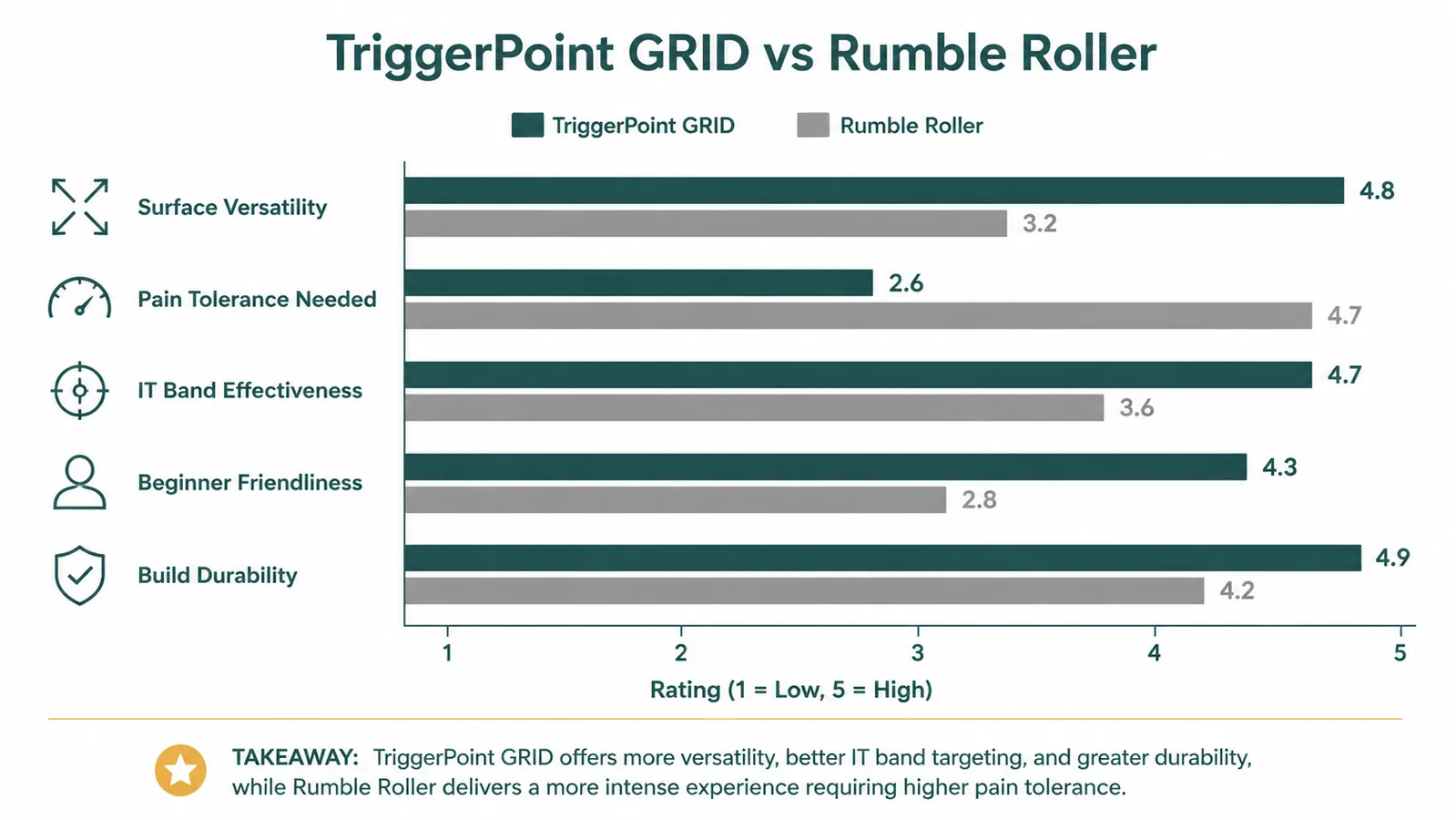
The GRID's multi-density surface is genuinely clever engineering, not marketing language. The three zones on the roller mimic the varying pressure a therapist applies: the hollow channels allow tissue to decompress rather than just compress against a hard surface, the denser ridges apply targeted linear pressure along muscle bellies, and the wider flat zones let you sit into a hold without the discomfort spiking past a productive threshold. That graduated pressure is why this roller works as well on a thoracic mobilization as it does on a quad flush.
For daily use, the GRID wins on sustainability. When you roll a sore quad the morning after squats, you need enough pressure to move tissue without so much pain that you avoid the roller entirely. The GRID threads that needle. Over two years of watching athletes in a strength and conditioning setting, I have seen people actually pick up the GRID and use it consistently. The athletes who bought aggressive rollers like the extra-firm Rumble Roller often stopped using them after a few weeks because the pain-to-benefit ratio felt punishing rather than productive. Consistency beats intensity in recovery work. The GRID earns consistent use.
The plastic hollow core also means the GRID does not flatten or compress with repeated heavy use. A conventional PE foam roller loses its integrity within a few months under a 200-pound lifter. The GRID is rated to hold shape under repeated loads because the structural integrity comes from the rigid inner cylinder, not from the foam itself. I have used the same GRID for two years of daily sessions and the surface geometry is unchanged. That durability matters when you are paying $40 versus $10 for a budget roller.
Where the Rumble Roller Wins
The Rumble Roller's raised bumps do reach deeper into muscle tissue than the GRID on specific muscle groups, particularly the thoracic erectors and the glute-hip external rotator complex where muscle depth means the standard GRID pressure does not penetrate far enough to feel meaningful. For a very experienced athlete with high pain tolerance and dense muscle mass, the extra-firm Rumble Roller can deliver a trigger point release in the thoracic spine that the GRID simply cannot match. The bumps act like individual thumbs pressing into the tissue rather than a roller gliding across the surface.
The Rumble Roller also gives body feedback more precisely. Because the bumps are discrete contact points, you can feel exactly where a trigger point is by the specific bump that catches on it. Some experienced lifters prefer that granularity, especially for targeted piriformis and glute-medius work where pinpointing the right spot matters more than covering a broad surface area. If you have been rolling for three or more years and you have already maxed out the GRID on your densest, tightest tissue, the Rumble Roller is worth trying.
Your IT band does not care how tough the roller looks sitting on your shelf.
The TriggerPoint GRID is the roller that gets used every morning before it becomes optional. Over 31,000 athletes have put it under their tissue daily. Check today's price on Amazon and see why physical therapists keep it stocked.
Amazon Check Today's Price on Amazon →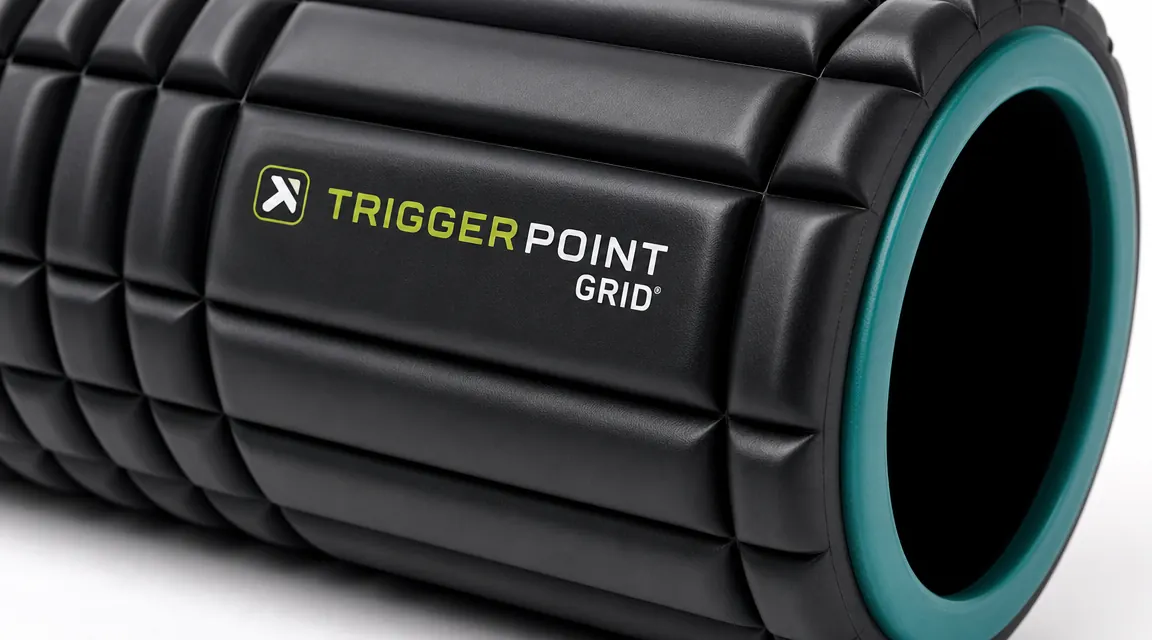
The IT Band Test: Where Most Athletes Make the Wrong Choice
The IT band comparison is worth its own section because it is the reason most athletes go looking for a foam roller in the first place. Knee pain on the lateral side of the leg, the classic tightness that builds through a training block, the stiffness that makes descending stairs after a long run feel like punishment. Both rollers address it. They address it very differently.
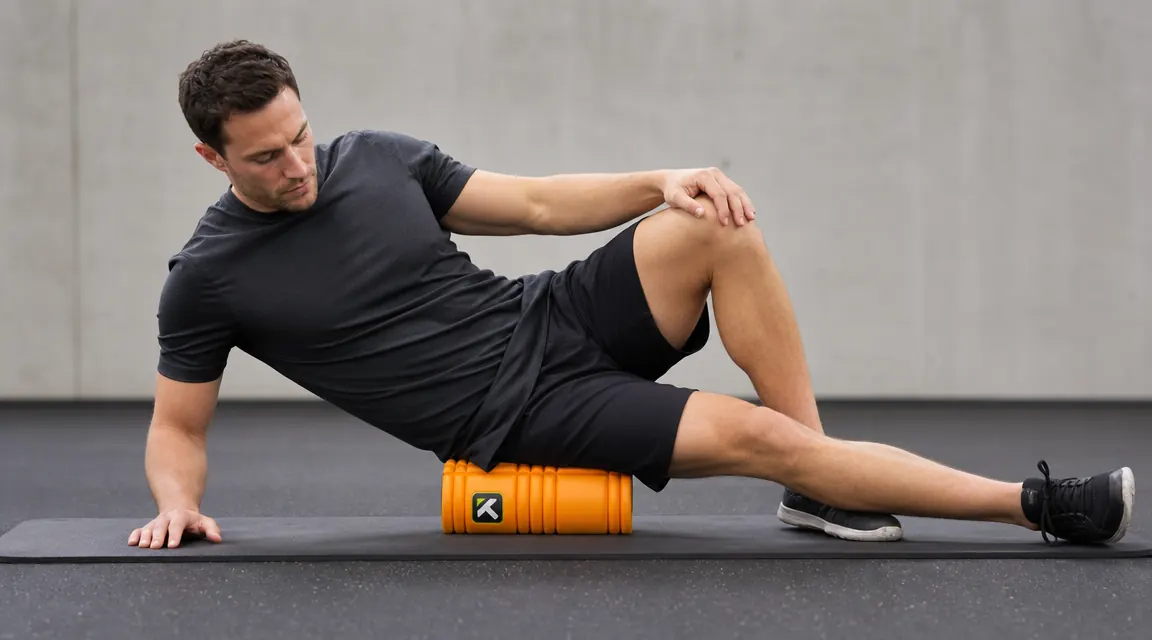
On the Rumble Roller, IT band work is aggressive. The bumps dig into the iliotibial band's lateral surface and the underlying vastus lateralis with enough specificity that many athletes get a sharp, localized sensation that can cross the line from productive discomfort into genuine pain. That is not always counterproductive, but it tends to make athletes hold their breath, move too fast across the tissue, and spend less time at the key adhesion points. Rushing through IT band work is worse than not doing it at all.
The GRID's graduated pressure allows you to find the tight band, sink your body weight slowly into it, and hold for a 30-to-60-second sustained release without the discomfort becoming intolerable. That sustained hold is where fascial release actually happens. Fascia responds to prolonged mechanical load, not to quick aggressive strokes. The GRID's surface design is better aligned with how myofascial release actually works from a tissue physiology standpoint. For IT band work specifically, the GRID is the better clinical choice.
Fascia responds to prolonged mechanical load, not to quick aggressive strokes. The roller you will actually hold still for is the one doing real work.
Beginner vs Experienced Athlete: The Real Deciding Factor
If you are new to foam rolling or returning after a break, start with the TriggerPoint GRID. The pain tolerance required for effective use of the standard Rumble Roller is higher than most beginners expect. Pain that overwhelms your nervous system produces a protective muscle guarding response, which is the opposite of a myofascial release. The GRID gives you enough stimulation to feel productive without triggering that guarding reflex. You learn to breathe through the pressure, locate adhesions, and control your body weight on the roller, all of which are skills that take several weeks to develop.
Experienced athletes training 5-plus days a week who already roll consistently and want more from their hip flexor and thoracic work should consider whether the GRID is still giving them a training stimulus or whether they have adapted to it. For most people, the answer is that the GRID is still working fine and the perceived need for something more aggressive is based on habit rather than necessity. But for a 220-pound powerlifter with very dense posterior chain tissue, the extra-firm Rumble Roller adds a tool the GRID cannot replicate. Know which category you are in before you spend the extra $15 to $50.
Who Should Buy the TriggerPoint GRID
Buy the TriggerPoint GRID if you train 3-5 days per week, you want a single roller that handles quads, hamstrings, IT band, thoracic spine, calves, and hip flexors without swapping tools, you prefer a morning rolling routine you will stick to long-term rather than one that feels like punishment, or you are newer to myofascial release and want to build the skill correctly before adding intensity. At 4.7 stars across 31,842 verified buyers and a price point that holds value against its durability, the GRID earns its place in every serious training room.
Who Should Consider the Rumble Roller Instead
The Rumble Roller makes sense if you have been rolling daily for two or more years and the GRID no longer gives you a meaningful release sensation, you are a heavier or very muscular athlete working on deep posterior chain tissue (thoracic erectors, piriformis) where you genuinely need more penetration depth, and your pain tolerance for recovery work is already trained high enough that the extra firmness feels productive rather than punishing. If that is you, the standard Rumble Roller is a reasonable addition. The extra-firm version is a specialist tool for a small subset of athletes and should not be a first purchase.
Still rolling on a flat PE cylinder that has gone soft in the middle? The GRID is a different tool entirely.
The multi-density grid pattern, the rigid hollow core, and 31,000 athletes who kept using it long-term are the reasons this is the foam roller physical therapists actually recommend. Check today's price on Amazon.
Amazon Check Today's Price on Amazon →